Mobile App
Translate between Zambian languages and English.
Use ZedTranslate for quick everyday translation with context built around local language use.
Download appTranslate, learn cultural context, and explore Zambian language tools for Bemba, Tonga, Nyanja, Lozi, Tumbuka, and English from one practical app.



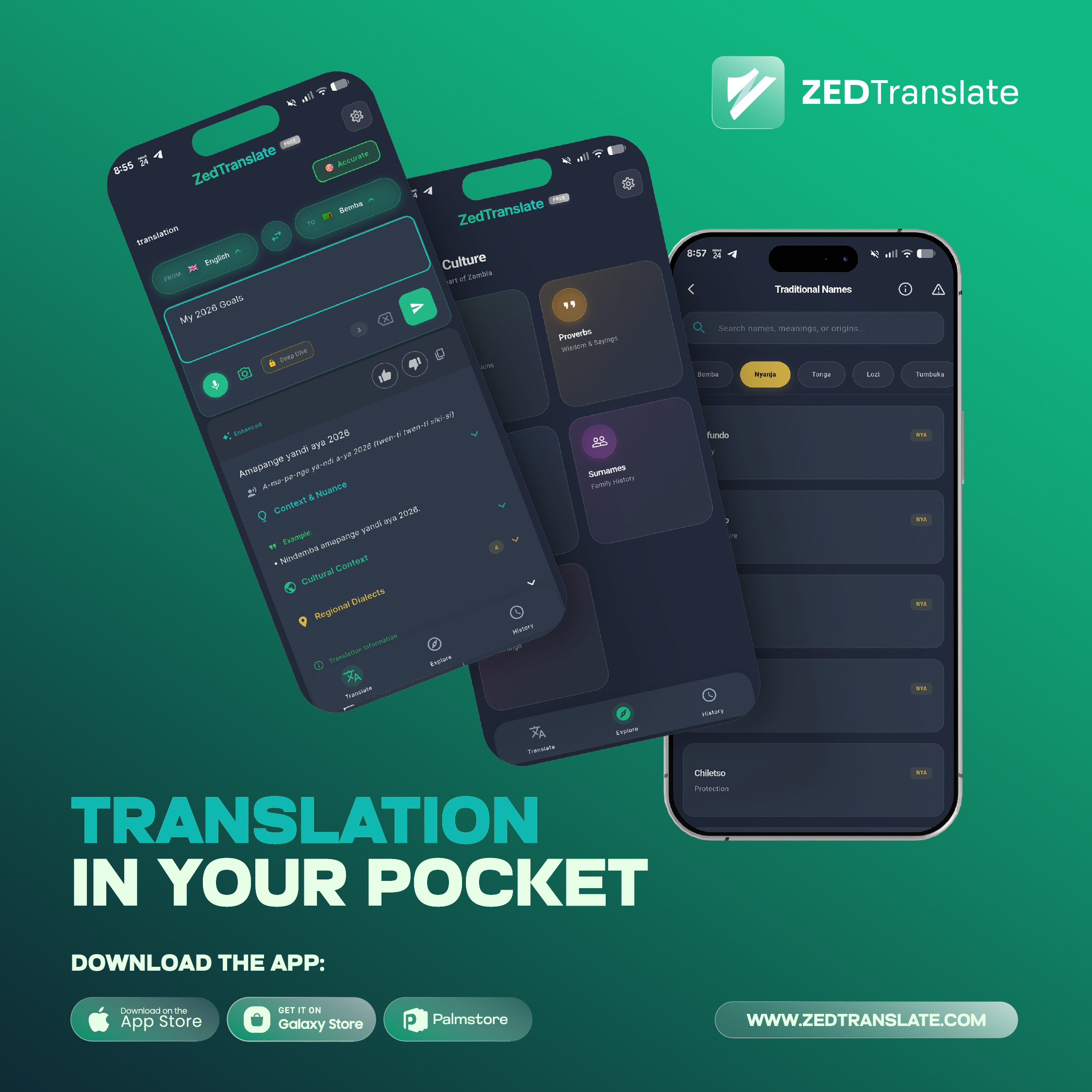
Start in the mobile app, then use the API docs when you are ready to integrate.
ZedTranslate keeps the main actions simple: translate quickly, understand cultural context, explore language references, and connect developers to the same language platform.
Use ZedTranslate for quick everyday translation with context built around local language use.
Download appExplore local meaning so translations are not separated from the people who use them.
Open cultural guideSpeech and translation surfaces support practical language tasks beyond plain text.
How it worksReview request patterns, endpoints, support paths, and integration guidance.
View API docsInstall ZedTranslate from Google Play, the App Store, or Galaxy Store.
Select your languages and get a translation surface built for everyday use.
Use cultural notes, names, sayings, and examples to understand meaning.
Developers can move from app learning into structured API documentation.
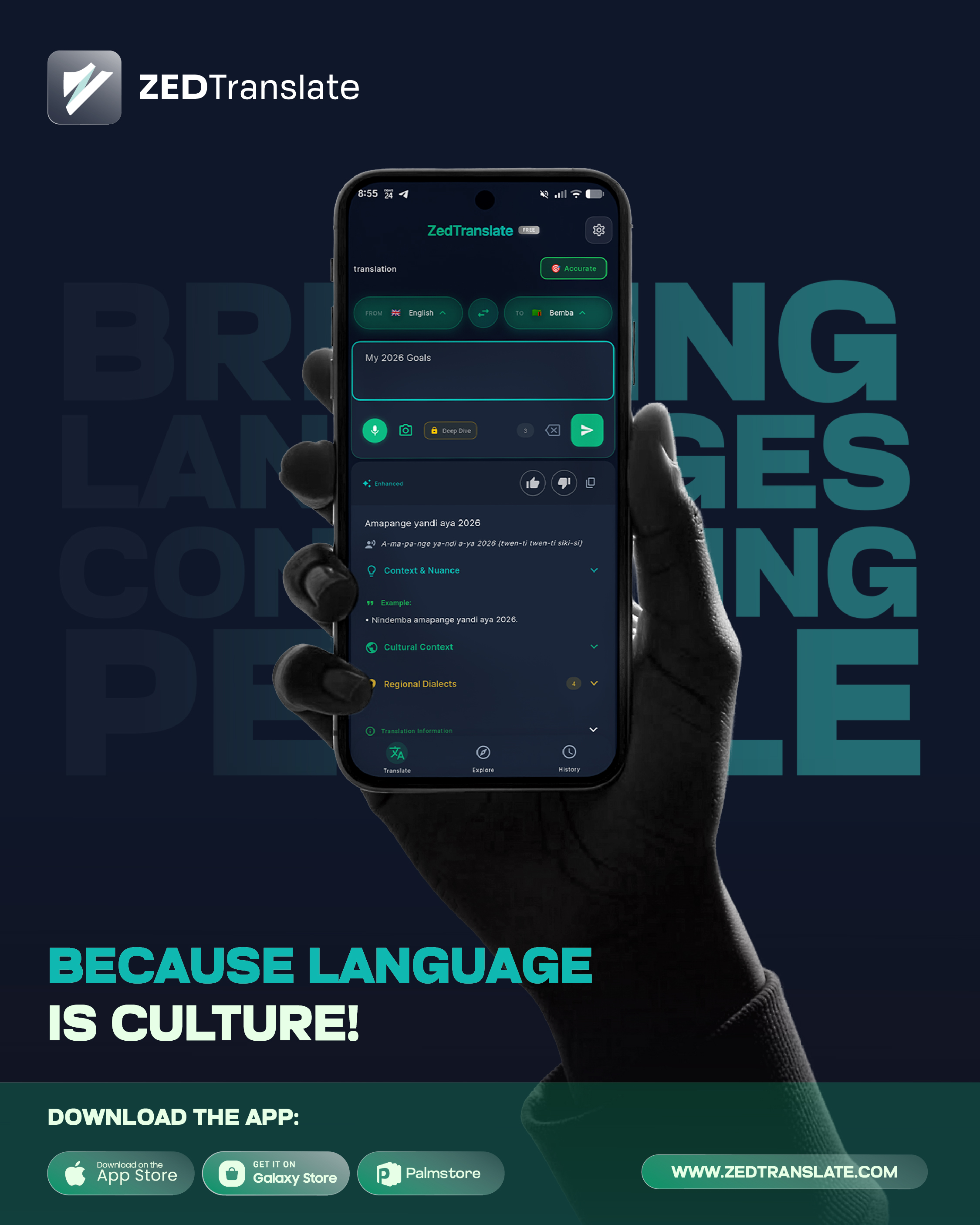
POST /v1/translate
{
  "source": "en",
  "target": "bem",
  "text": "Good morning"
}

{
  "translation": "Mwabuka buti",
  "context": "formal greeting",
  "surface": "mobile | api"
}ZedTranslate focuses on practical language support with regional and cultural context built into the content surfaces around the product.
| Language | Primary regions | Notes |
|---|---|---|
| Bemba | Northern, Copperbelt, Luapula | Widely used in commerce, media, and everyday communication. |
| Nyanja | Eastern, Lusaka, Central | Common in urban settings and cross-border communication. |
| Tonga | Southern Province | Strong agricultural and regional vocabulary. |
| Lozi | Western Province | Important ceremonial and governance context. |
| Kaonde, Luvale, Lunda, Namwanga, Tumbuka | North-Western, Northern, Muchinga | Included across product, reference, and cultural content surfaces. |